

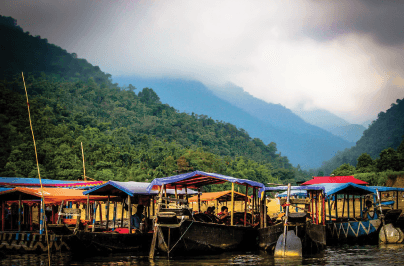
Culture in Bangladesh is encountered in river ports, family kitchens, crowded markets, quiet shrines, archaeological ruins, weaving workshops, and village courtyards. The most rewarding experiences are not simply places to photograph; they are opportunities to understand how history, faith, language, craft, and landscape shape daily life.
Walk through Old Dhaka
Old Dhaka brings together Mughal-era landmarks, colonial buildings, traditional food streets, workshops, mosques, temples, and the constant movement of the Buriganga riverfront. Explore with enough time to pause rather than treating the district as a checklist. A knowledgeable guide can add context to buildings and neighborhoods that are easy to pass without understanding their stories.
Explore Sonargaon and Panam City
Sonargaon was an important historic center of Bengal. The abandoned merchant houses of Panam City, nearby religious architecture, and folk-art collections reveal different chapters of the region's political and commercial history. Visit respectfully and avoid climbing on fragile structures.
Learn from archaeological landscapes
Paharpur, Mahasthangarh, Mainamati, and other archaeological areas connect modern Bangladesh with Buddhist, Hindu, and Islamic periods. Their value lies in the wider landscape as much as individual monuments. Museums and local interpretation help explain how trade, scholarship, and religious exchange linked Bengal with the wider region.
Discover textiles and living crafts
Bangladesh's textile traditions include jamdani weaving, handloom fabrics, embroidery, pottery, cane work, brass, and folk painting. Seek workshops or cooperatives where visitors can understand the time and skill behind an object. Buy directly from makers when possible, ask before taking photographs, and avoid bargaining in a way that dismisses skilled labor.
Experience Bengali food culture
A meal offers a compact lesson in geography and season. River fish, mustard, rice, lentils, vegetables, bhorta, breads, sweets, and tea appear in countless regional forms. Markets and home-style restaurants can be as informative as formal dining. Ask about ingredients and spice levels, particularly if you have allergies or dietary restrictions.
Visit tea country and community landscapes
Around Sreemangal, tea estates, wetlands, forest edges, and diverse communities create a cultural landscape rather than a single attraction. Visits should respect workers' privacy and local access rules. Community encounters are most meaningful when arranged with consent and when local people shape how their lives and traditions are presented.
Attend festivals with awareness
Pohela Boishakh, religious celebrations, seasonal fairs, music, and regional events can transform public spaces. Dates and access vary from year to year. Observe local guidance, expect crowds, and remember that a religious gathering is first a community occasion rather than a performance for visitors.
Make cultural travel reciprocal
Slow down, listen, and ask thoughtful questions. Use local guides where their knowledge adds value, support makers and small businesses, and be careful about photography involving children, worship, or private homes. Bangladesh's strongest cultural experiences come from recognizing people as hosts and collaborators, not scenery.


